GraphQL vs REST: Which Should You Choose?
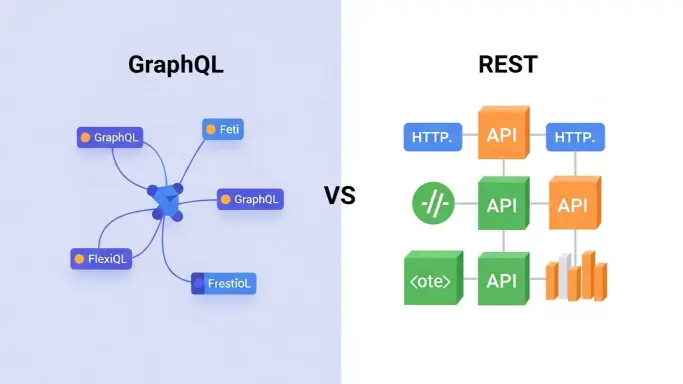
The honest answer is that this is a question about your clients, not your server. Count how many different consumers you have and how differently they need to read the same data, and the decision usually makes itself.
What GraphQL Solves
One endpoint, a typed schema, and clients requesting exactly the fields they need. Three round trips for a screen collapse into one, mobile payloads shrink dramatically, and the schema becomes living documentation with generated types on both sides.
```graphql
query Dashboard($id: ID!) {
  user(id: $id) {
    name
    orders(last: 5) {
      total
      status
      items { product { title price } }
    }
  }
}
That single request would be three or four REST calls, and the mobile team ships a new screen without waiting for a backend release. That last point is the real reason large organisations adopt it.
What REST Still Does Better
HTTP caching is the big one. A GET with an ETag is cacheable by browsers, CDNs, and proxies for free. GraphQL POSTs to a single URL are opaque to all of that, so you rebuild caching inside your application.
Operations are also simpler. Per-endpoint rate limiting, per-endpoint latency and error metrics, and log lines that immediately identify the slow route all come standard. In GraphQL every request is /graphql, so you need field-level tracing before you can answer basic questions. File uploads, streaming, and webhooks are plainly easier over REST too.
The Costs Nobody Mentions Up Front
- N plus one queries are the default failure mode. Resolvers execute per node, so a list of fifty items fetching an author each issues fifty queries. DataLoader-style batching is mandatory, not optional.
- A public schema is an unbounded attack surface. Deeply nested queries can be weaponised. You need depth limits, complexity scoring, and persisted queries in production.
- Errors arrive with HTTP 200. Every client, log pipeline, and monitor needs teaching.
- Authorisation moves into resolvers. Field-level rules are powerful and easy to get subtly wrong in one path out of twenty.
A Decision You Can Act On
Choose REST when you have one or two clients, mostly straightforward resource access, heavy read caching needs, or a small team. Choose GraphQL when several clients with genuinely different data shapes consume a highly connected domain and frontend teams are blocked waiting on endpoints.
The hybrid is often best and rarely discussed: GraphQL as a gateway for client-facing reads, plain REST or gRPC between internal services, and dedicated REST endpoints for uploads, webhooks, and anything a CDN should cache.
Whichever You Pick
Version deliberately, paginate with cursors rather than offsets, return machine-readable error codes alongside human messages, and put a request budget on every path. Most APIs that feel painful are not suffering from the wrong paradigm. They are suffering from unbounded queries and no observability.
Enjoyed this article?
Share it with your network and join the conversation.