Zero-Trust Architecture Explained
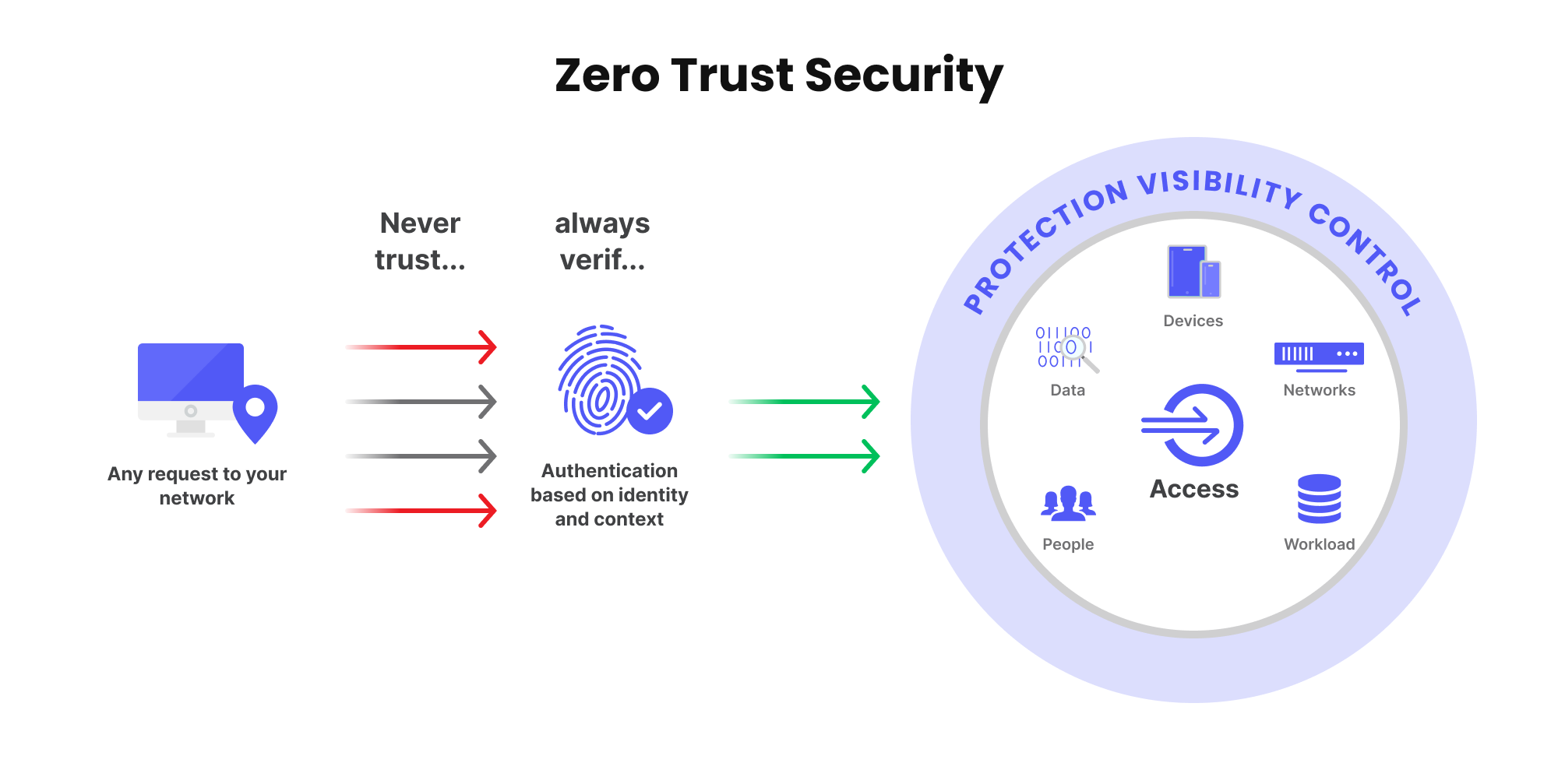
The castle-and-moat model assumed one thing: that being inside the network meant you belonged there. Remote work, SaaS, contractors, and cloud workloads destroyed that assumption. Zero-trust is the response, and it is an architecture, not a product you can buy.
The Three Principles That Actually Matter
Verify explicitly. Every request is authenticated and authorised using everything you know at that moment: user identity, device posture, location, resource sensitivity, and behaviour history. Network position is one weak signal among many, not a free pass.
Least privilege, granted just in time. Standing admin access is the single largest contributor to breach impact. Access should be scoped, time-boxed, and expire on its own without anyone remembering to revoke it.
Assume breach. Design as though an attacker already has a foothold. Segment aggressively, encrypt in transit and at rest, and log everything so you can reconstruct what happened.
Identity Becomes the Control Plane
In a zero-trust design the policy decision point sits in front of every resource, and identity is what it reasons about.
```yaml
policy: finance-reporting-db
allow:
  - identity_group: finance-analysts
    device:
      managed: true
      disk_encryption: true
      patch_age_days: { max: 14 }
    auth:
      mfa: phishing_resistant
      session_age_minutes: { max: 60 }
    access:
      duration_minutes: 30
      permissions: [read]
deny_default: true
The important line is the last one. Anything not explicitly permitted is refused, which is the inverse of how most legacy networks behave.
Microsegmentation Without Breaking Production
East-west movement is how a single compromised laptop becomes a company-wide incident. Segmentation stops it, but flipping to default-deny blindly will take down services nobody documented.
The workable sequence is: observe traffic in logging-only mode for several weeks, build an allow-list from what genuinely happened, enforce on one low-risk segment, then expand. Start with your crown jewels, domain controllers, source repositories, finance systems, rather than trying to segment everything at once.
Common Ways This Goes Wrong
- Buying a product and calling it done. ZTNA gateways and identity providers are components. The architecture is the policy model that connects them.
- Ignoring service-to-service traffic. Human users get MFA and conditional access while API keys and service accounts keep unlimited standing access. Attackers have noticed.
- Policy sprawl with no owner. Hundreds of hand-written exceptions eventually recreate a flat network. Version policy in Git, review it, and expire exceptions automatically.
- Forgetting legacy. The systems that cannot speak modern auth are exactly what attackers pivot to. Wrap them in a proxy or isolate them.
Where to Begin Tomorrow
Inventory your identities and devices, enforce phishing-resistant MFA on administrative accounts, remove standing privilege from your most sensitive system, and put one application behind an identity-aware proxy. Those four steps deliver more real risk reduction than a year-long roadmap that never ships.
Zero-trust is not a project with an end date. It is a shift in default posture, from trusting the network to verifying every request, and it advances one resource at a time.
Enjoyed this article?
Share it with your network and join the conversation.